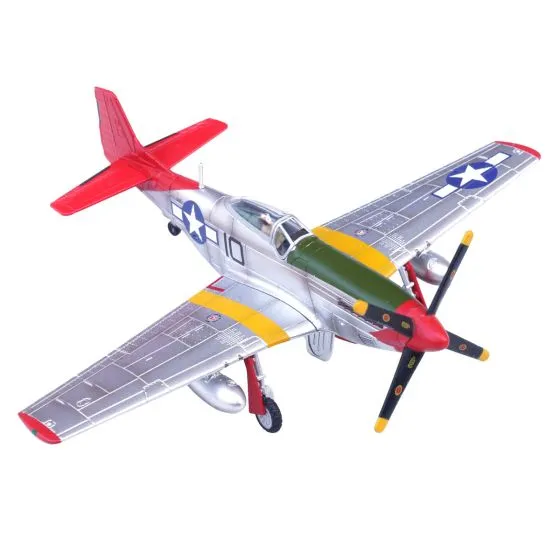
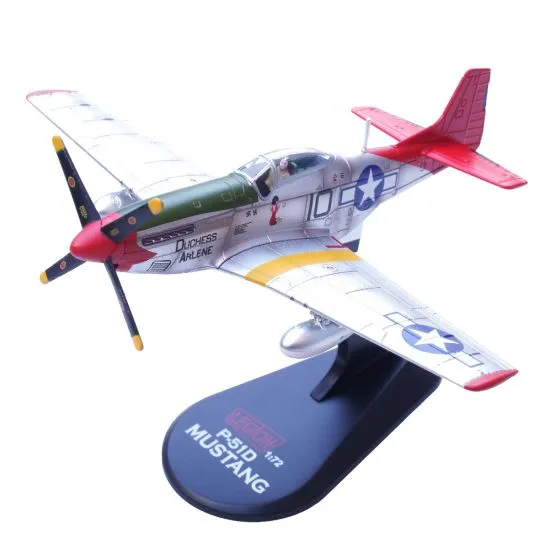
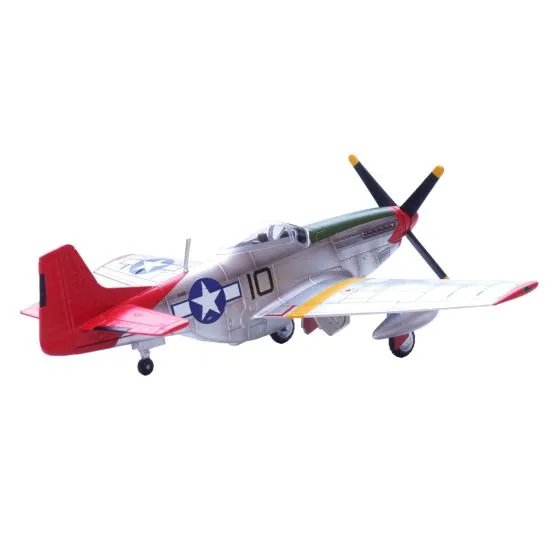
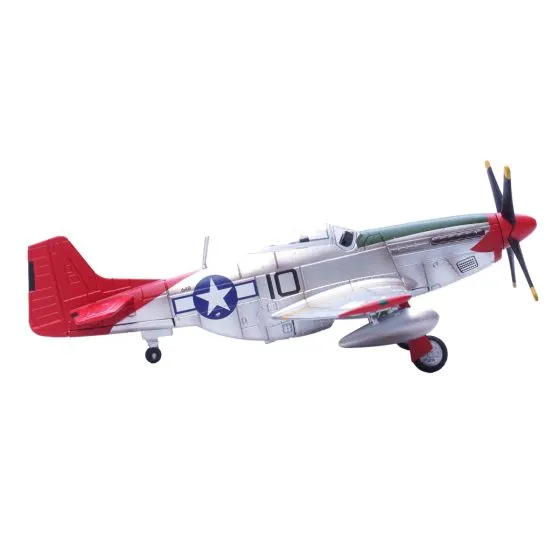
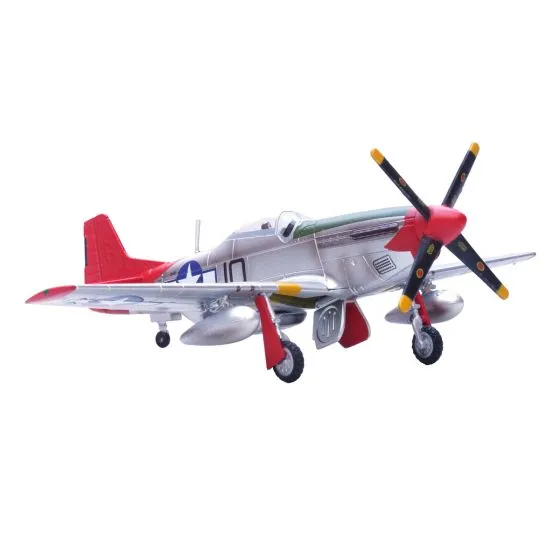
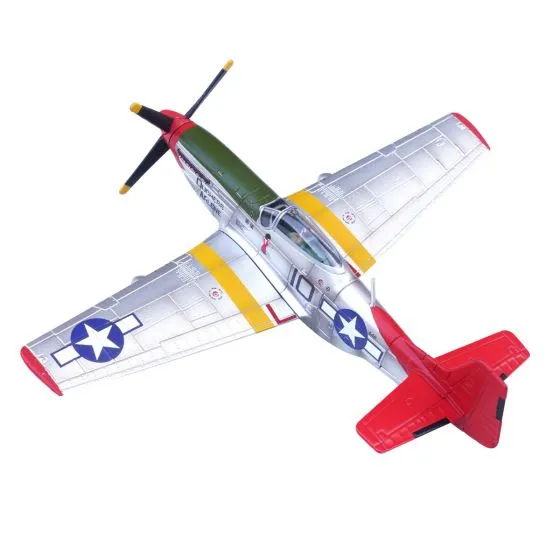
This aircraft was piloted by Tuskegee Airman Lt. Robert W. Williams, Jr.
Assigned to the 100th Fighter Squadron “Tuskegee Airmen” unit, this P-51D Mustang was piloted by Lt. Robert W. Williams. Initially denied enlistment due to the color of his skin by the Army Air Corps, Williams would later receive training in Tuskegee, Alabama. Graduating third in his class, Williams was accepted into the 100th Fighter Squadron in 1942. Receiving his own P-51D Mustang on arrival to the unit, Williams named the aircraft “Dutchess Arlene” after his sweetheart Arlene Roberts. Adorned with two victory markings, which Willams received after taking down two Focke Wulf FW-190 fighters, his aircraft sported the iconic “red-tail” Tuskegee markings.
Features:
– Authentic paint scheme, engraved panel lines, printed decals, antennas, and surface details
– Optional retracted or deployed landing gear
– Attachable press-fit fuel tanks
– Display stand included
– Measures 5.5”l with a 6.25” wingspan at 1:72 scale
– Officially licensed
History and Specifications:
One of the hallmarks in WWII history, the iconic P-51 Mustang is an aircraft that adapted through conflict to defeat even the most powerful foes. Developed by North American Aviation in the 1940s as the successor of the P-40 Warhawk, it would be ordered by the Royal Air Force to serve as one of their mainline fighters. Though not originally purchased by the USAAF, the intervention of General Hap Arnold resulted in 55 of the early examples being retained as photo-reconnaissance aircraft.
Building on success of early A-through-C models, the P-51D Mustang was reconfigured with several notable improvements. Sporting a new “bubble-top” canopy, K-14 gunsight, and an additional set of machine guns bringing the total from four to six, the P-51D entered operation in Spring of 1944. Far superior to most rival Axis fighters following this upgrade, the venerable Mustang exited WWII with 4,950 aerial victories across all four models.